Thank you to Councilmember (and mayoral candidate) Tracy Jensen, Councilmember Greg Boller, Vice Mayor Michele Pryor, and Mayor Marilyn Ezzy Ashcraft for moving a proposed infrastructure funding measure closer to our November ballots.
Each reached and framed their affirmative vote distinctly.
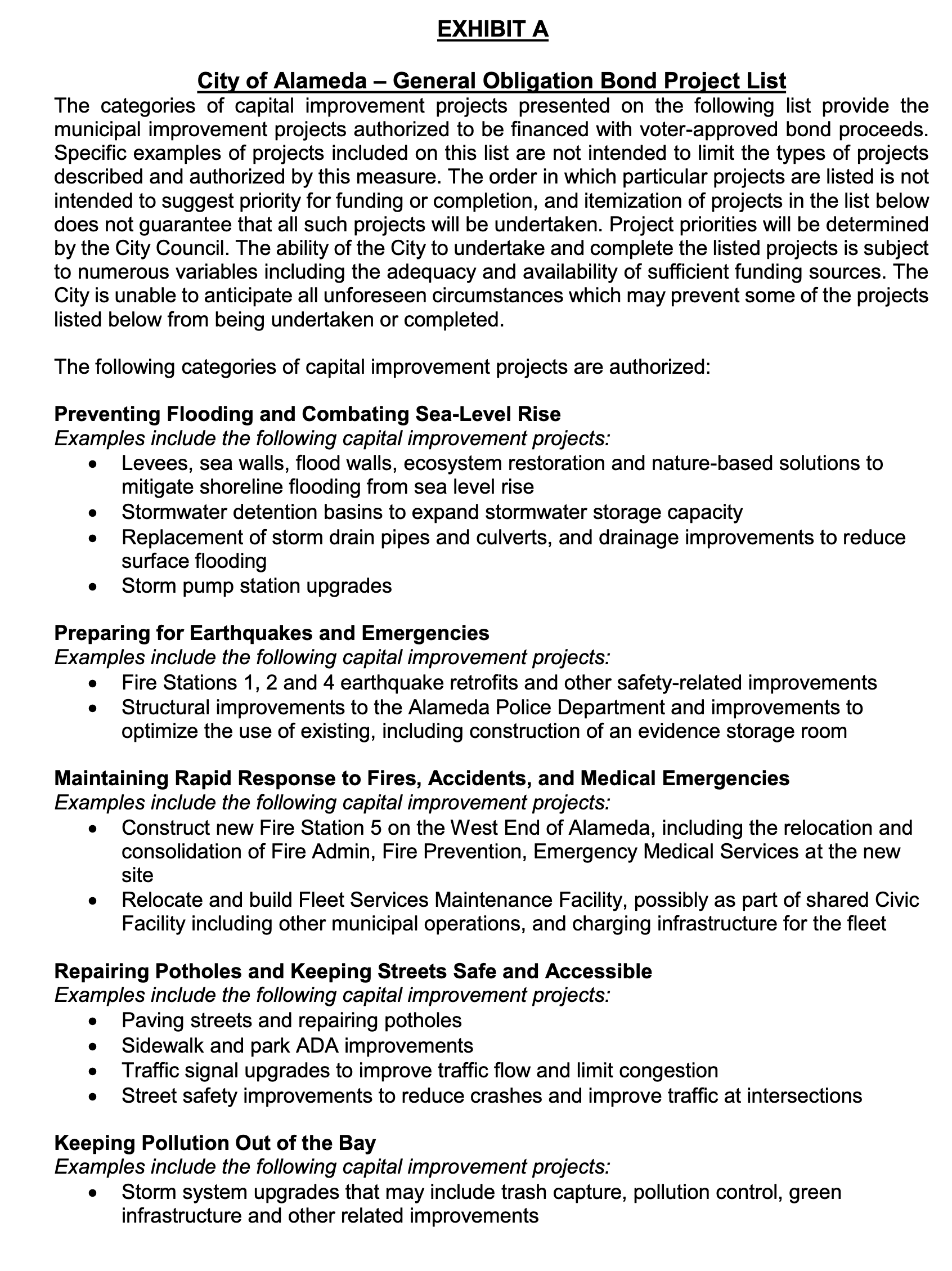
That diversity of perspective is indicative of Alameda's overlapping needs to improve streets, reduce risks of flooding, and prepare for earthquakes — all combining hard infrastructure needs and strategically sustainable approaches. The proposed bond carries the title SAFER Alameda Act, for Sea-Level Rise, Accidents, Flooding, Earthquakes, and Resilience. Its authorized spending falls into five specific capital categories:
That diversity of perspective is also reflective of a broad coalition. Some Alamedans rent, some Alamedans own their residence. Some Alamedans feel the sting of FEMA-required flood insurance, while other Alamedans feel the sting of damage or injury on an unsafe and poorly maintained street (or the worry of those situations affecting their kids, partners or aging parents). Alamedans agree that climate change is real and pressing — but the preparations and mitigations that are top of mind for each of us do vary. What it means to be a sustainable city, an equitable city, and a secure city resonates broadly but also in subtly distinct tones.
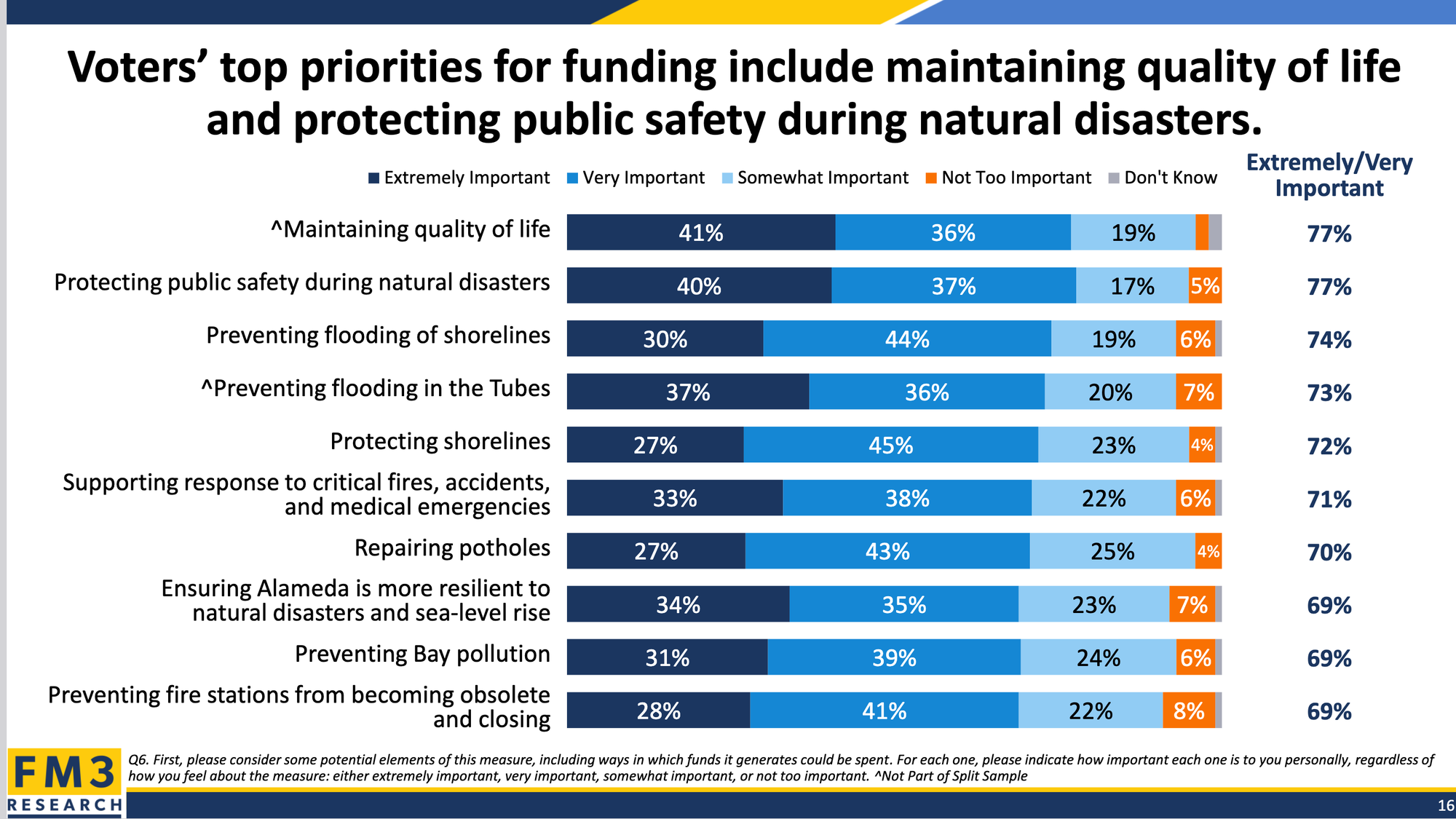
Each perspective also comes with its own cautions and concerns. Councilmembers who affirmatively moved the measure forward on Tuesday evening did so with pointed questions, constructive criticism, and cautious optimism. Asking voters to raise our own property taxes should not be done lightly.
The proposed measure meets concerns with rigor:
- a set of defined capital categories to which all bond spending is restricted (narrower than a typical open-ended municipal bond, closer to the constrained scope voters expect from a school bond)
- an annual report on all use of bond proceeds
- a dedicated oversight committee to review usage of the bond proceeds
- all pre-existing process requirements for budgets and contracts to be publicly brought to City Council and aired with full public input and public voting
(In contrast with the councilmembers who actively engaged with the proposal in front of them, Councilmember and mayoral candidate Tony Daysog only gave the same oppositional remarks that he has given in previous years — despite substantive refinement by staff, stakeholders, and consultants. This listener found it an unfortunate and lazy attempt at differentiation. He can run whatever kind of mayoral campaign he wishes to. As far as the responsibilities of his current role are concerned, Mayor Ezzy Ashcraft was on the mark at Tuesday night's meeting when she said, "The voters elected us to make decisions, not kick the can down the road year after year with the same tired excuses.")
The range of constructive voices at Tuesday evening's meeting also included: Community Action for a Sustainable Alameda, who've worked for decades to prepare Alameda for climate change; former Councilmember and current mayoral candidate Malia Vella; transportation safety advocates; labor organizations representing Alameda's first responders and local skilled tradespeople; the head of Alameda's non-profit partner operating the animal shelter and support facilities, among others.
The proposal moved forward by City Council represents a strategy set out over the past 2 years by former City Manager Jennifer Ott, continued with verve by former Communications & Legislative Affairs Officer Sarah Henry, and brought to fruition by the city's current Sustainability and Resilience Manager, Fire Chief, and Public Works Director. City staff have been supported by the same consulting and polling teams that have successfully helped Alameda Unified craft effective, persuasive, and fiscally sound funding measures. Together this team has reached a wide range of likely voters, community groups, business associations, and folks with questions, concerns, and hopes.
There will certainly be more to do. On July 21, the measure will require another affirmative vote of four councilmembers to fully advance to the ballot. A robust and positive campaign (not conducted by the City) will need to meet voters where we each are and continue to make the case on the merits for this ask of taxpayers and this investment in our shared city.
I appreciate how four councilmembers, each in their own ways and from their own perspectives, reached their affirmative votes. To use the opening framing of this blog, each of these four councilmembers engaged with change.