If Trump's first term in the White House led writers to try to reintroduce Americans to Andrew Jackson, Trump's second term has prompted the reintroduction of John C. Calhoun.
But if you've been looking for the former US senator and vice president — and proponent of slavery — he's been visible in plain sight all along.
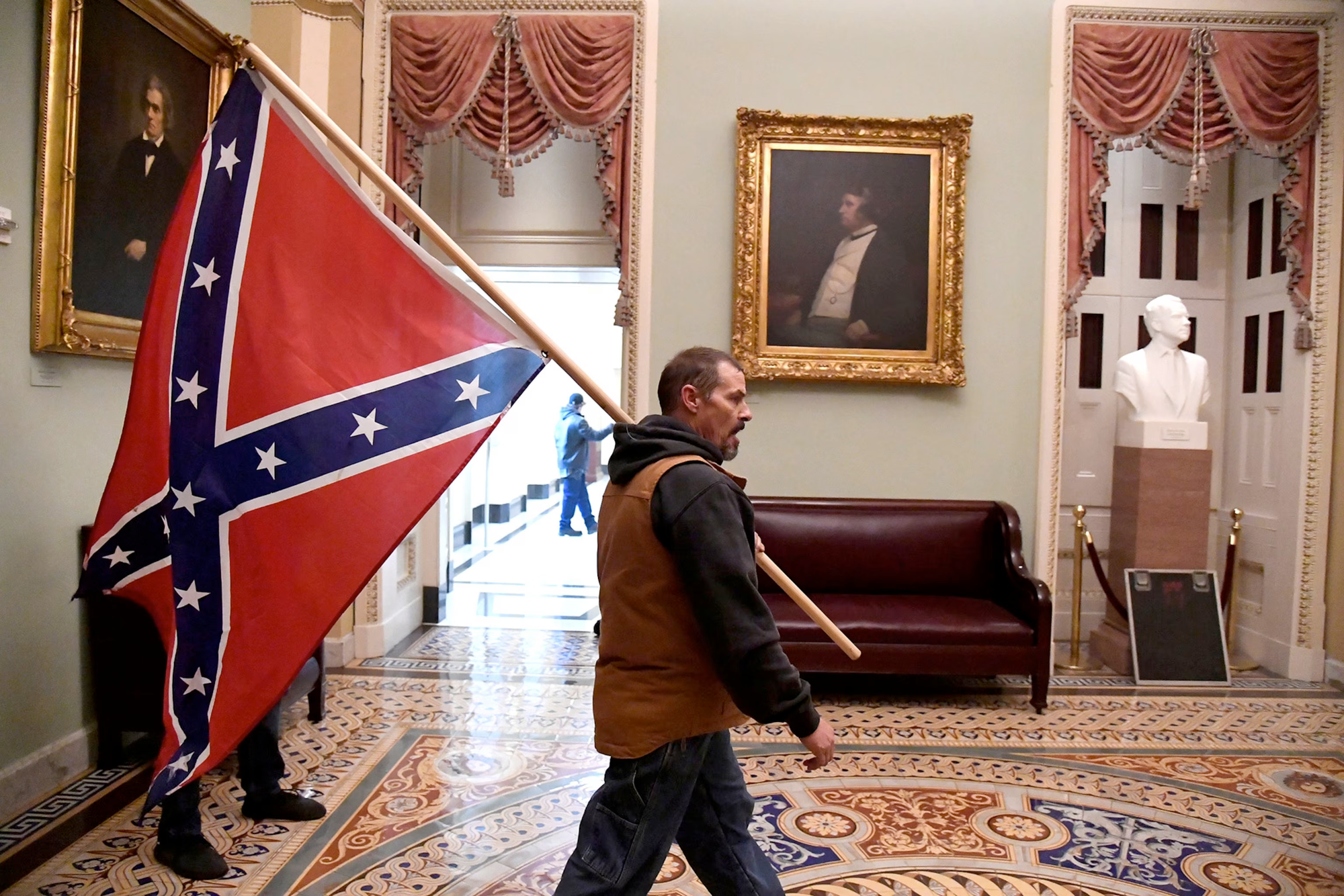
When Trump's supporters violently stormed the US Capitol, there he was — just to the left of a Confederate battle flag held aloft:
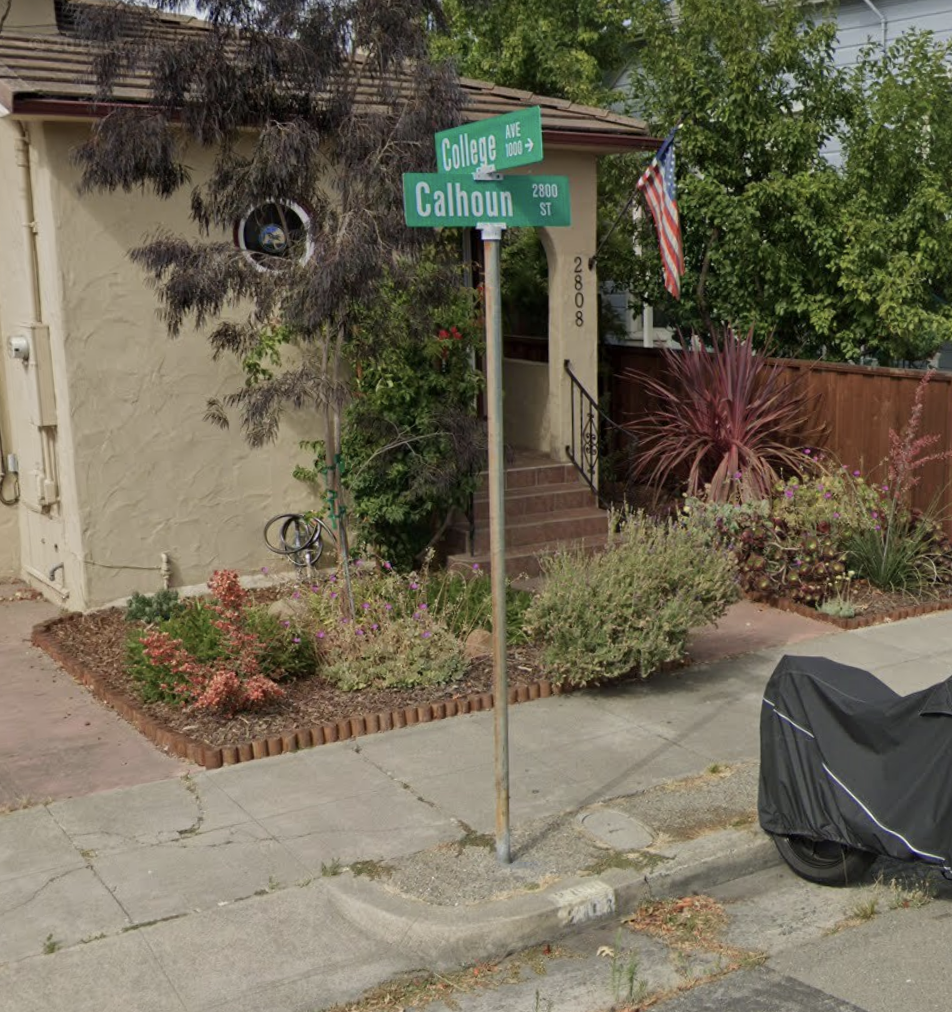
When I walk my kids to school each morning, there he is up on our street signs:
And when I joined my 4th grader's class on a field trip to the Oakland Museum earlier in the year, there he was quoted on the wall in an exhibit on California statehood:
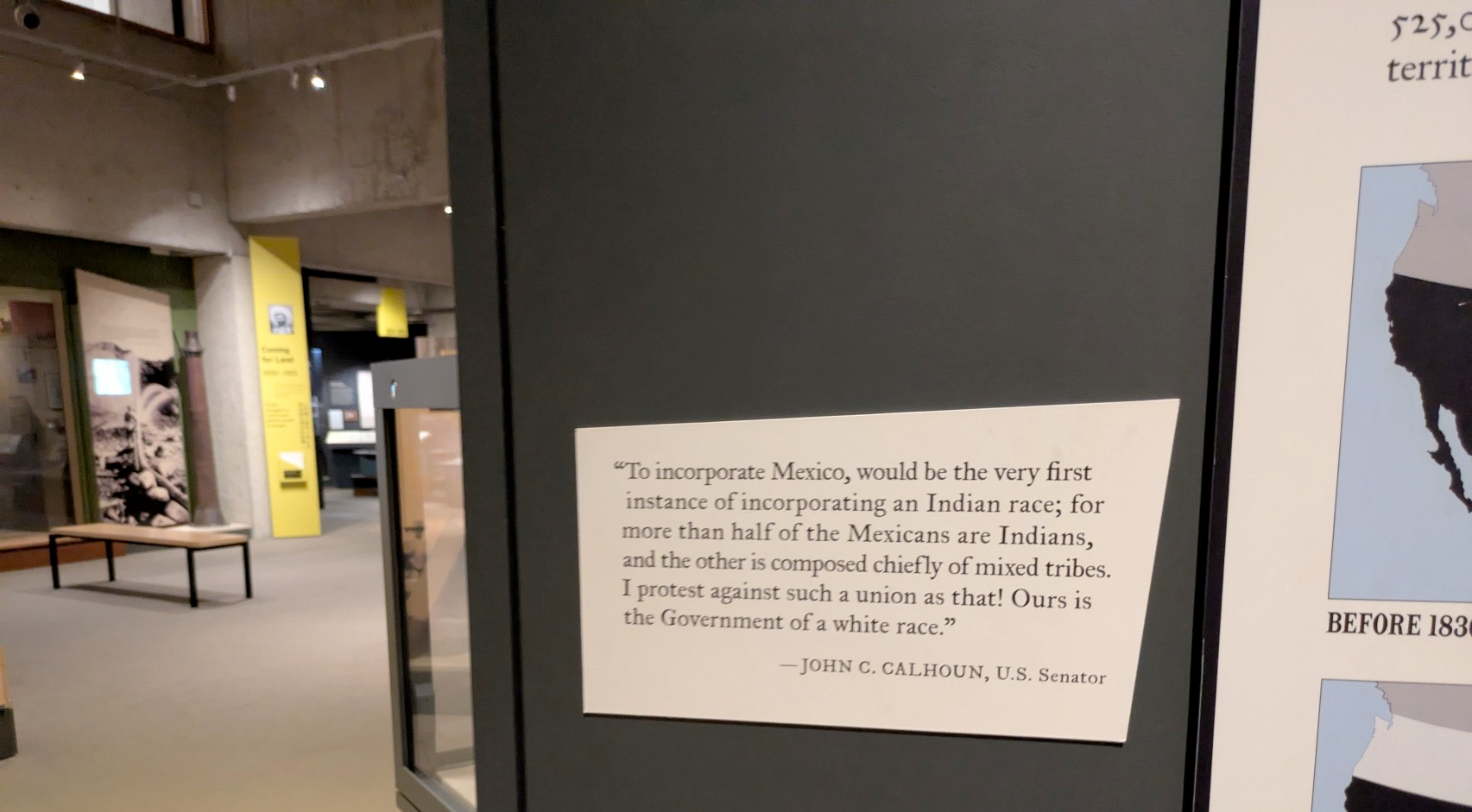
"Ours is the Government of the white man" is also quoted this week by Adam Serwer in a column in The Atlantic titled "John C. Calhoun Lives," linking Calhoun's intellectual legacy directly to Trump's demand that the Supreme Court decide that the Constitution does not provide birthright citizenship.
Some years ago my neighbors and I requested a reconsideration of Alameda's Calhoun Street. If Yale University could transform its Calhoun College into Grace Murray Hopper College, then couldn't Alameda? If Minneapolis could return its Lake Calhoun to the Native American name of Bde Maka Ska, then couldn't Alameda? (Or maybe Alameda could at least come up with a secondary street name and install some small interpretive signage?) Nah...
The Planning Board members ignored our emails. The City Manager's office ignored our emails. After some more rounds of prodding, the Alameda Sun wrote a few articles and printed some letters, and hundreds of people signed an online petition. What a subsequent year of organizing resulted in was the City of Alameda adopting a new policy. This policy for proposed renamings of streets and parks has been followed exactly zero times. (The one instance since then in which the city renamed a different street, the Mayor requested that the renaming policy be bypassed.)
I gathered that most of my neighbors who were involved saw little reward in continuing to be involved in any other city issue after that disappointing experience. I now spend my spare civic time advocating for other topics: transportation, public services, and housing.
The symbolism of street names is of small consequence compared to this Supreme Court case on birthright citizenship and other more tangible topics. And yet the persistence of a street name memorializing a noxious legacy is also a measure of a certain complacent comfort and an unfortunate unwillingness to engage with change.
Taking matters into our own hands a few years ago, my spouse created a decorative sign for my office:
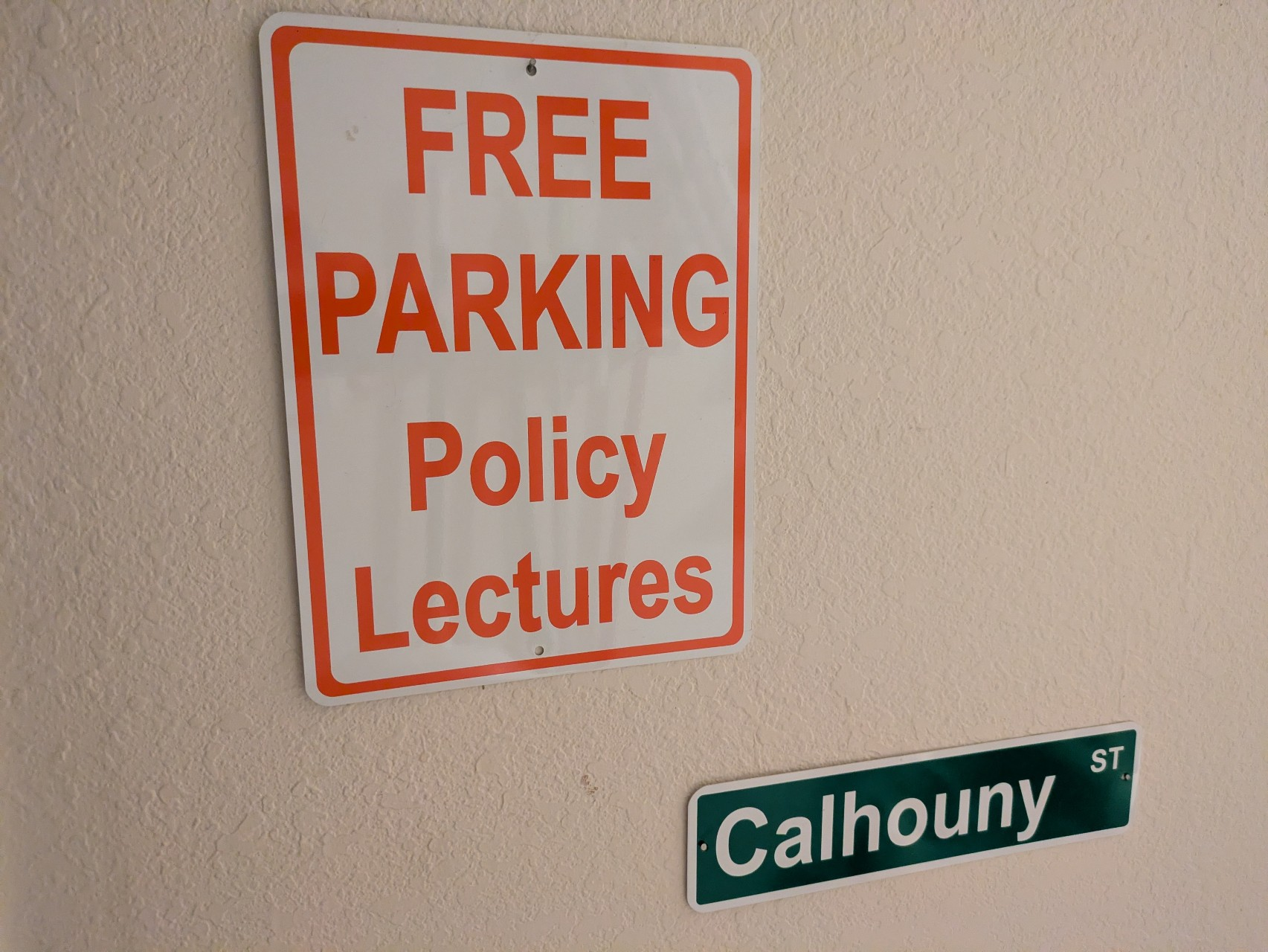
And along the way our kids have picked up saying "Calhouny Street" as well.
While it may not grapple with his vision of an America with white male citizens, Black slaves, and all others excluded, "Calhouny" does perhaps at least begin to undercut the man's august stature.
For, unfortunately, as the Atlantic puts it, "John C. Calhoun Lives."