The last driver-on-driver crash at Pearl and Fernside before it's fixed for good?
As I walked to work this morning, I heard a loud squeal and a muffled thump.
It had happened yet again — and by chance I was nearby to witness it: a car crash at the top of Alameda's Pearl Street.
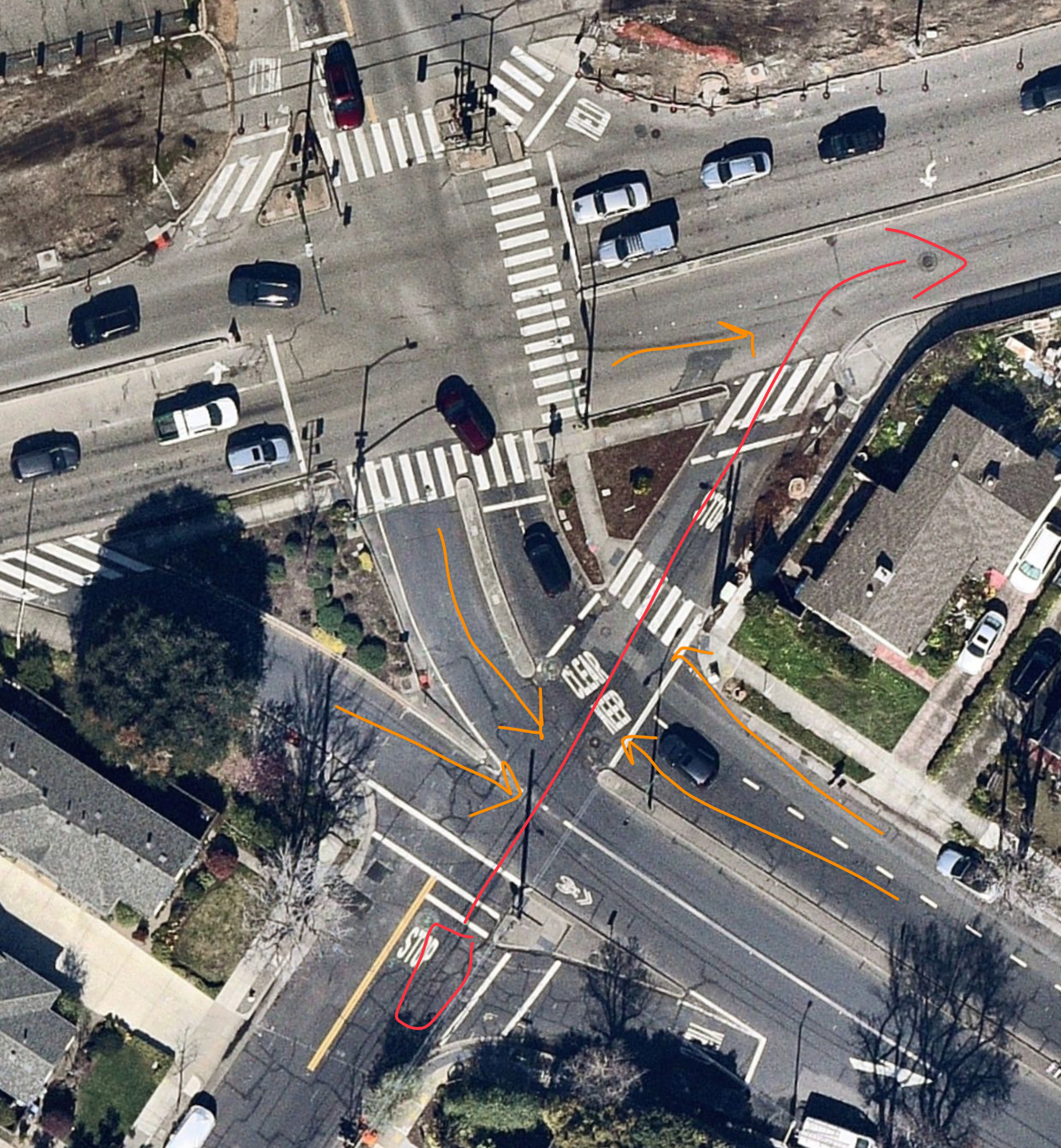
This type of crash is practically encouraged by the street network's current design. There are multiple conflict points as drivers attempt to dart northbound across Fernside Boulevard.
Like the sirens in my kids' "Percy Jackson" audiobooks, the reward at the end of this gauntlet is so temping: a quick entry onto the Fruitvale bridge.
This blog has previously written about how drivers are often guided by Google Maps to enter Pearl St way down at Otis Drive and to take it the entire length up to Tilden (crossing multiple unsignalized intersections in the process), and this blog has previously written about how the City of Alameda does have a solution: the "modern roundabout" to be constructed soon will force a right-turn for auto traffic exiting the top of Pearl Street.
The long-term prognosis is good.
Still, immediate solutions to this problematic intersection at Pearl/Fernside have been available for years. Some of those decorative concrete barricades that Public Works staff have placed to protect Lincoln Park's wrought iron fence could just as well have also been placed at the northern end of Pearl Street, to halt dangerous "cut across" traffic. Such a targeted intervention would have directly modified traffic patterns on only a single block in the entire city, while likely preventing multiple driver-on-driver crashes that have occurred in recent years.
But whereas Public Works staff are empowered to use their professional judgment to place concrete barricades to reduce the odds of another drunk driver damaging park fencing, Public Works staff must apparently wait on input from elected officials to make even the most carefully targeted of adjustments to auto flows to address immediate traffic safety concerns.
After hearing the noise and seeing one of the cars turn on its flashing hazard lights, I walked the long block to the top of Pearl and Fernside. By that time, the drivers had moved their cars to the shoulder. They were both standing. No one appeared to be hurt. And like a crash that I witnessed outside the main library at Lincoln/Oak a couple months ago, this will probably just turn into a saga of insurance claims to repair their damaged vehicles.
On the upside, the prognosis for this intersection is good — the Clement Avenue/Tilden Way Improvement Project will remove all those "conflict points" and greatly reduce the odds of future crashes. On the downside, Alameda has collectively decided that precisely targeted adjustments to reduce the odds of driver-on-driver crashes at intersections like Pearl/Fernside and at Lincoln/Walnut can only be made after going through long planning and engagement efforts, plus subjective involvement from elected officials.