SOFTBALL SOFTBALL CEMETERY!
Hi, Alameda Girls Softball Association players! I'm glad to hear you're enjoying fall ball.
THAT'S WHERE YOUR TEAM'S GONNA GET BURIED!
You know, I preferred it back in your "8U" seasons when you all were cheering "pump that softball spirit up." I used that cheer to frame a blog post about Krusi Park and how many people this park serves with zero off-street parking spots.
SIX FEET WIDE AND SEVEN FEET UNDER!
O.K., girls, I got it. In your "10U" years you are now playing to win, and I appreciate tha...
SIX FEET WIDE AND SEVEN FEET UNDER!
Oh, that reminds me. You want to hear about what's buried under Krusi Park?
WHEN WE HIT WE HIT LIKE THUNDER!
No, it's not the dead bodies of your opponents buried under Krusi.
WHEN WE HIT WE HIT LIKE THUNDER! [softball players then run off toward Field 2]
Thanks for bringing all that energy to this blog post, players. Good luck with your game!
As I was saying, there's a secret buried under Krusi Park — or at least it's a secret to those of us who have moved to Alameda in the 21st century.
The secret tank under Field 2
There's an underground facility buried under what AGSA players call Field 2:
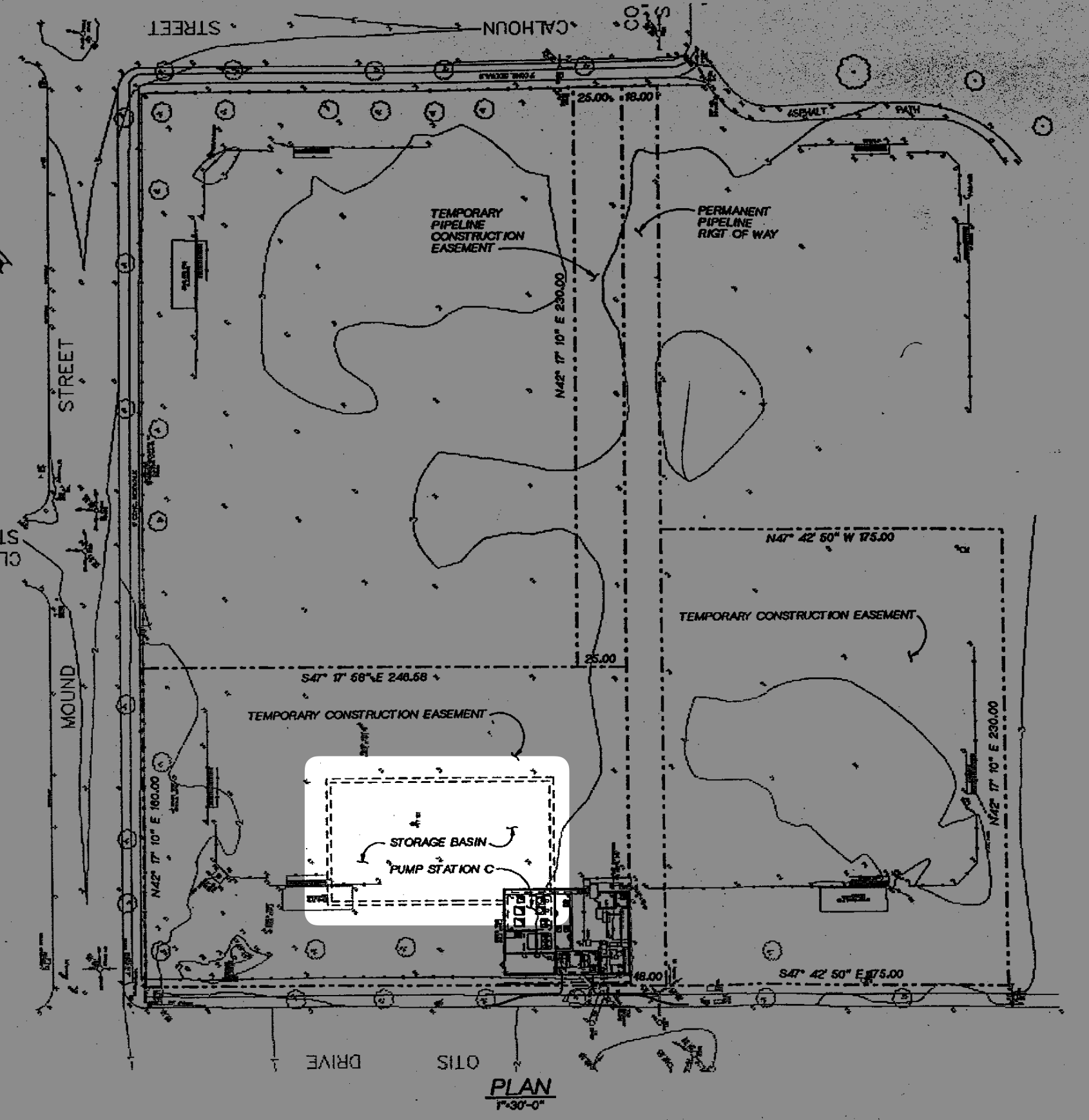
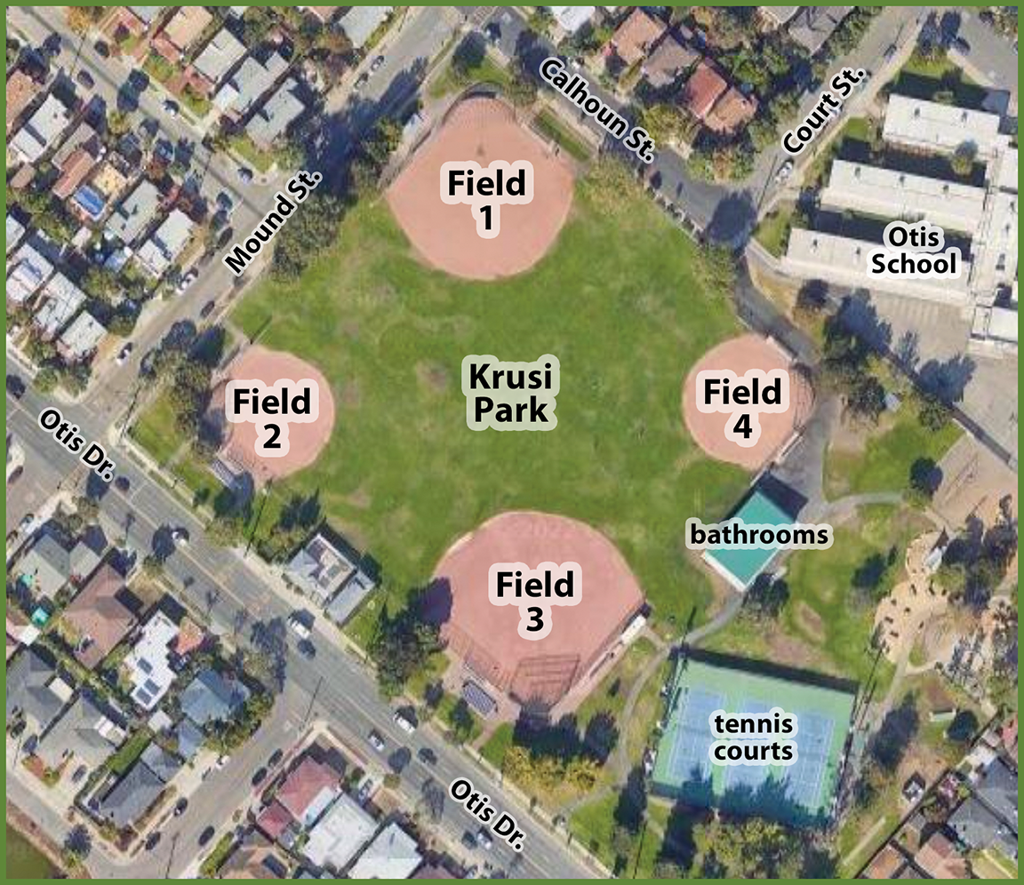
Left: EBMUD construction documents highlighting underground storage basin Right: city softball fields often used by Alameda Girls Softball Association
Hey first base player! Yeah, you. Nice play! — and did you know you're standing right on top of a tank that keeps 1,000,000 gallons of sewage from going into the bay during heavy rainfall?
You're sticking your tongue out at me? Yeah, you're right... I'm on the bleachers and I'm sitting right above the tank, too:
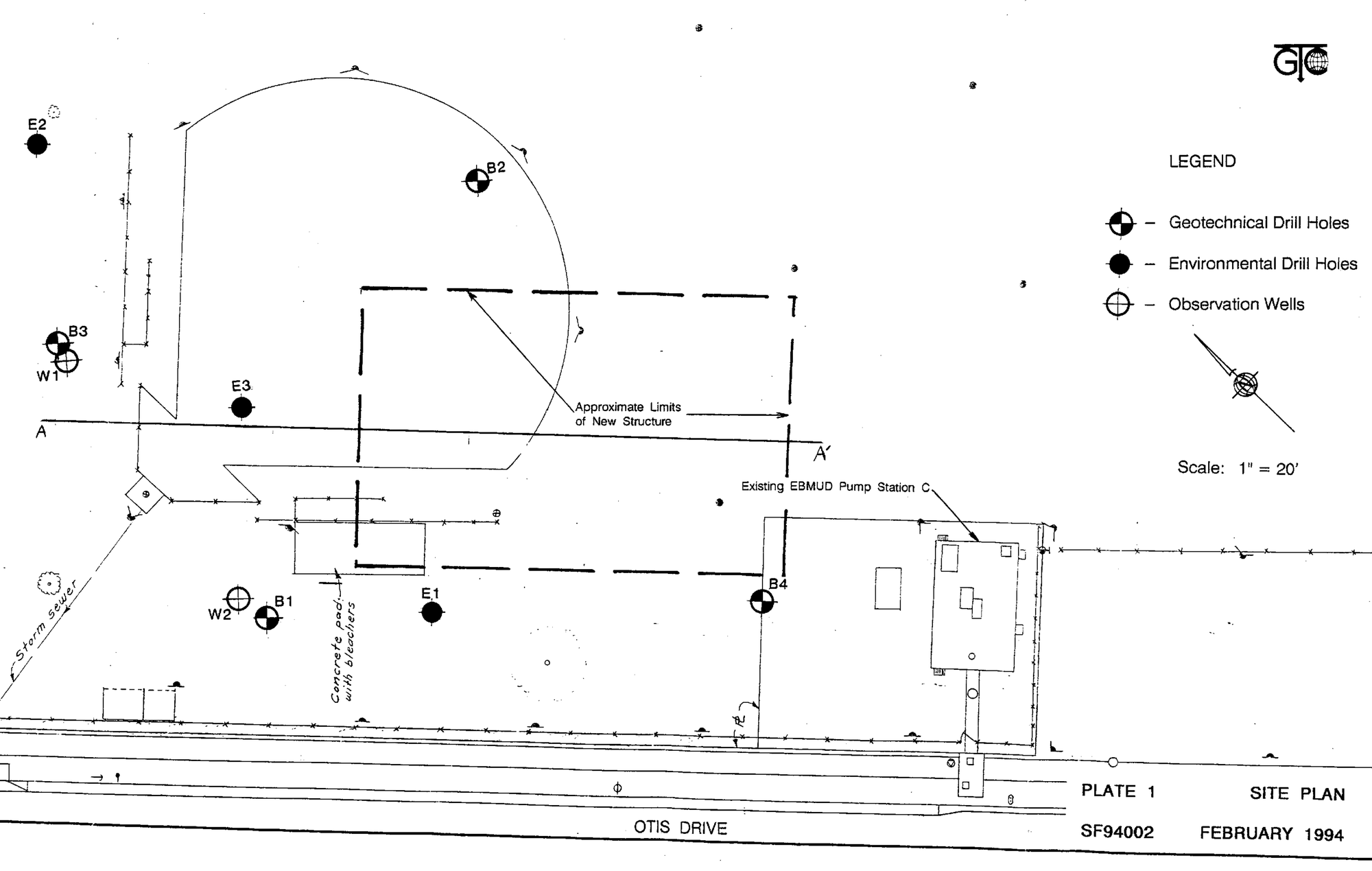
While that softball players' cheer involves burying their opponents 7 feet underground, "the top of the [reinforced concrete storage basin is] about 1.5 feet below the finish grade." That's according to a geotechnical memorandum written in 1994.
At my own school, which also abutted a public park, the big buzz of 1993 was when a "black mamba" was rumored to be on the loose around Palo Alto. We weren't allowed to have PE or recess in the park for what felt like months. Or, given how age can distort the feeling of time, maybe it was just a single week?
The storage basin that's now fully hidden from view and the pump station at the park's edge that is so bland as to be barely noticeable did not happen without effort: In addition to the reports already mentioned, a trail of typewritten letters across EBMUD, the county, and the city is still archived describing the project's environmental review and remediation. And these now-hidden and now-barely-noticeable pieces of infrastructure were not built without cost: EBMUD used a revolving state loan to build the project. Local property owners with developed parcels paid off that loan (and other related improvements) through the Wet Weather Facilities Charge that appears on property tax statements. The measure of success for all this engineering and environmental work by consultants and staff at multiple agencies, the use of a loan, and the fees paid by us EBMUD ratepayers is that almost no one notices the successful outcome.
Sewage does not overflow during rainstorms around Alameda's East End and South Shore neighborhoods — and as an added benefit, the hidden infrastructure handling that sewage was paired with refreshed softball fields still used by Alameda Girls Softball Association to this day.
Fixing today and tomorrow's problems
Even as sewage is being successfully managed, each rainy season and the arrival of king tides bring new challenges to the neighborhoods around Krusi Park.
On the Sunday morning in September when a range of residents gathered at Krusi's picnic area for coffee and tea to kick off the Measure L campaign, all was placid and the weather was pleasant. To understand what winter can bring to this part of town, zoom into the Otis Elementary & Krusi Park point on the map below at left — and then scan your eyes more widely to see the patterns of where consultants estimate that during extreme storm scenarios, more than 1,140 residential buildings may be exposed to future flooding:
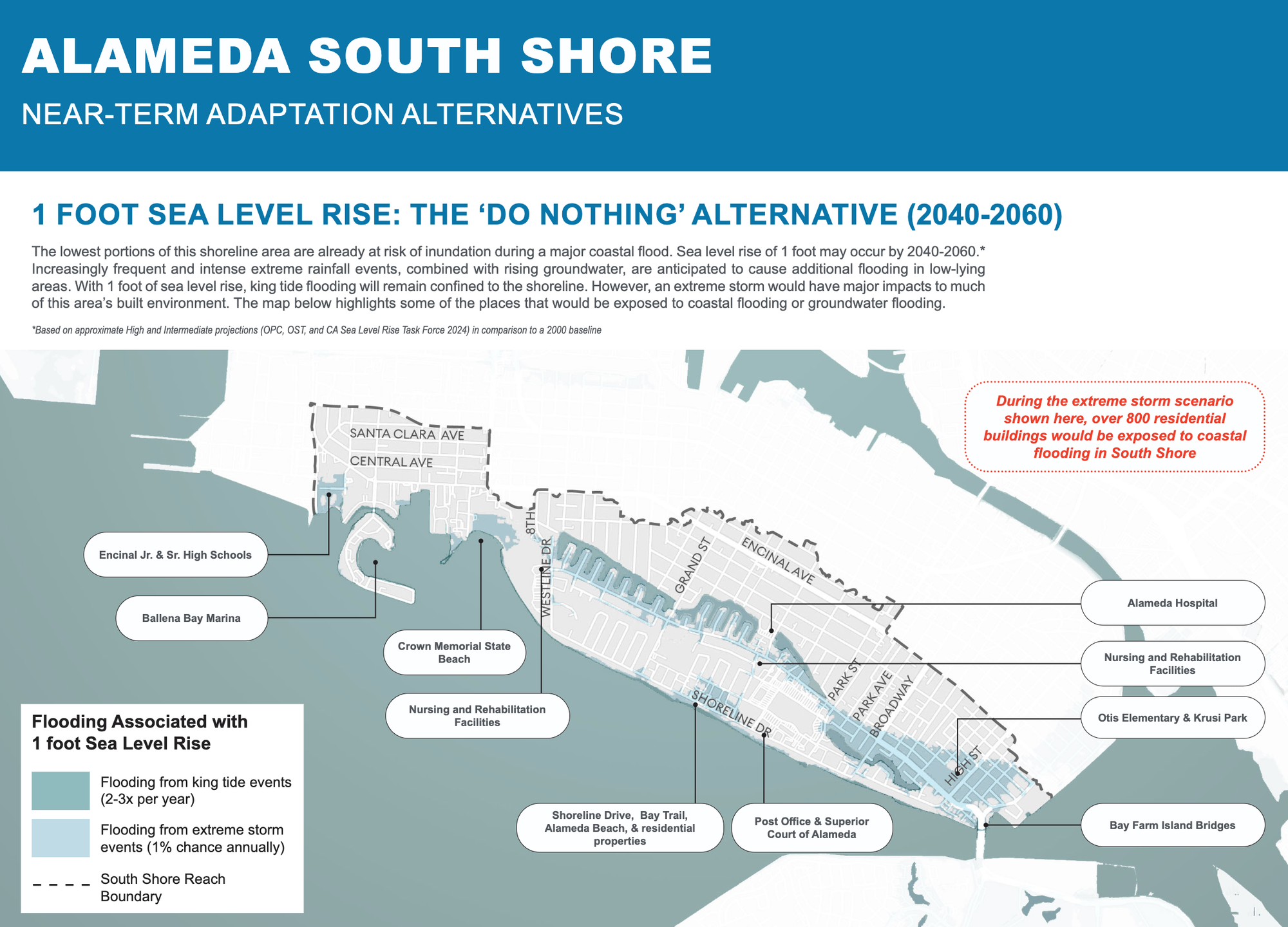
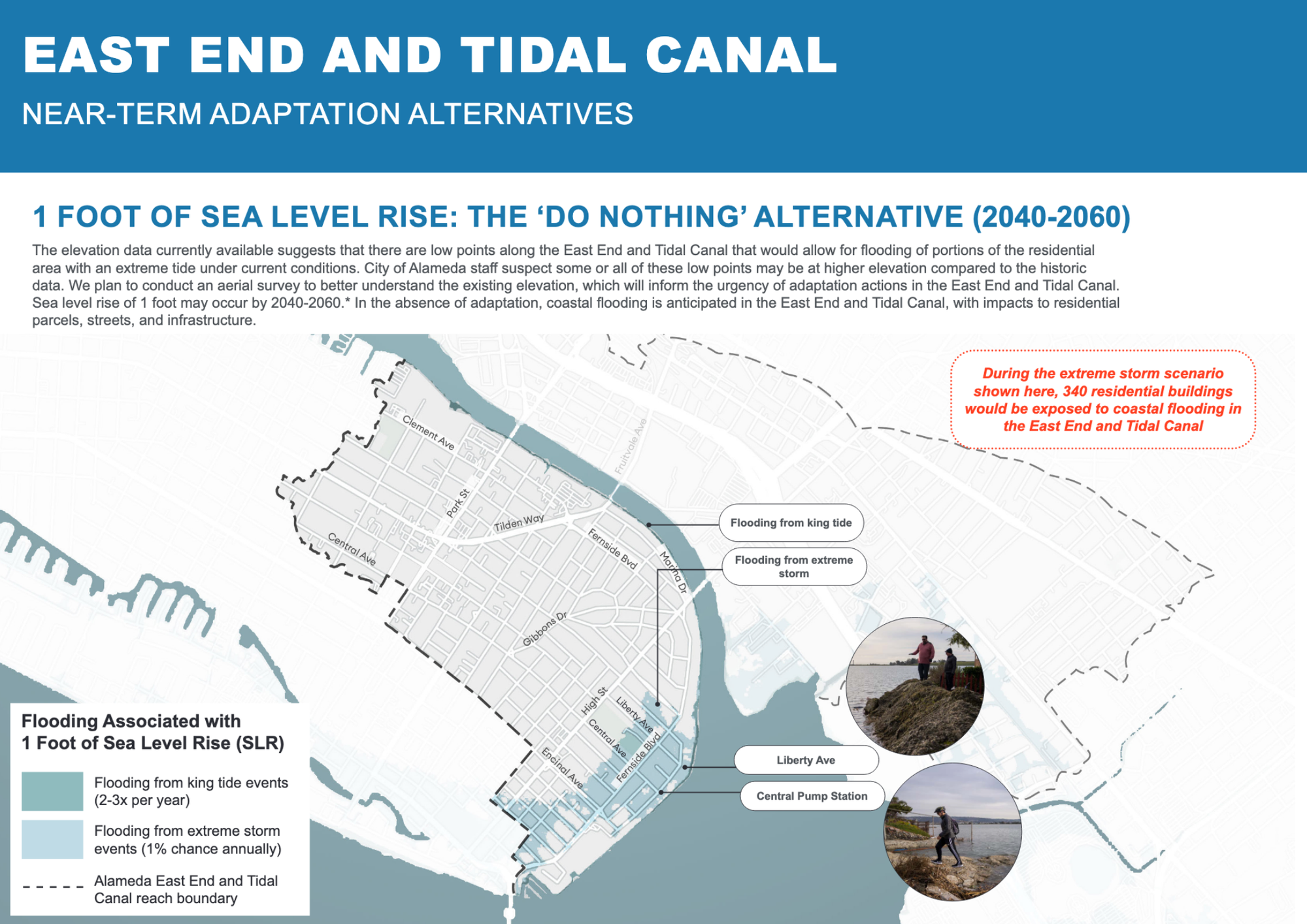
Left: Alameda South Shore adaptation planning; right: East End adaptation planning.
As demonstrated in recent years, it's the combination of fast rainfall paired with already high tides filling lagoons and outfalls that can temporarily flood streets and send water into garages and below-ground floors.
Water is an intermittent threat to private property. In the future, it may also be a threat to public property. The backdrop to our Measure L kickoff event was the multi-story tall rig currently driving piles for the new Otis Elementary School. Just as the original Otis building was in service from 1951 to 2026, hopefully the new complex (which is being built thanks to voters and taxpayers via AUSD's Measure B) will serve many decades of students to come.
Just as EBMUD's ratepayers addressed the threats of sewage overflow around Krusi Park, flooding from rain and tides around this area is a problem that can be actively managed. It will not be a single solution. Rather, handling these challenges will involve a range of immediate and longer-term improvements. Some will be "hard" concrete and pump stations, and some will be more "natural." To list a few of the projects in planning:
- City of Alameda has engaged civil engineers to study the Eastshore/Central pump station, which serves the eastern end of Alameda Island, as well as study the golf course pump station draining portions of Bay Farm.
- City of Alameda is pursuing a regional grant to rebuild Fernside Boulevard. If received in full, this grant would enable the city and the city's engineering consultants to not just redesign the surface of the roadway but also Fernside Boulevard's storm drains to better handle current and future rain conditions.
- Street medians and fields that are currently covered in grass may be repurposed in the future to also detain water as it drains from streets, percolates into the ground, or flows to the bay.
- Along Alameda Island's southern shoreline, planners propose "intertidal improvements to create wave breaks and offshore bird habitat":
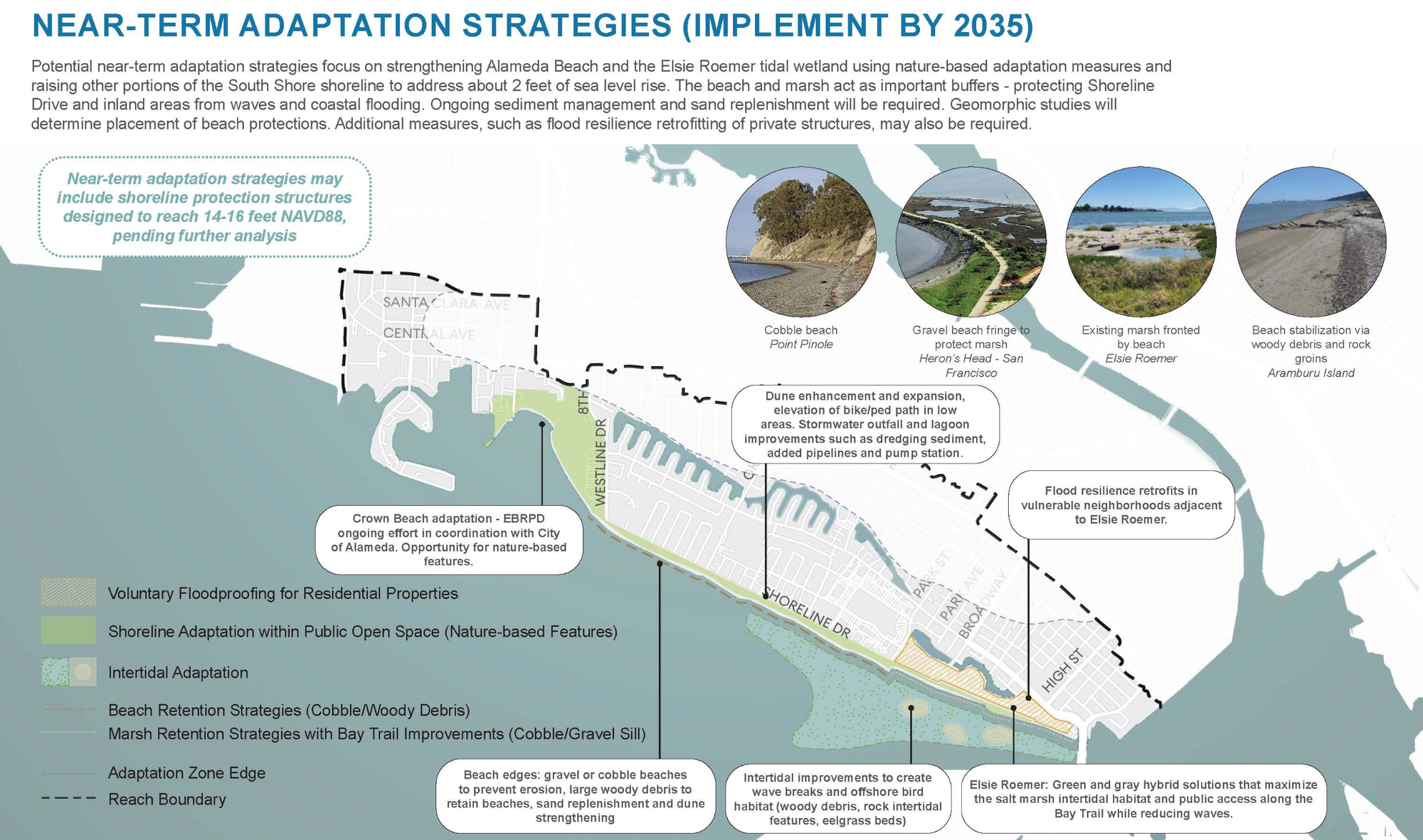
It's these combinations that I personally find most exciting.
- In the 1990s, EBMUD's ratepayers funded the combination of the construction of a storage basin hidden under Krusi Park's Field 2 and the rebuilding of the softball fields now used by my daughter and her teammates (and the dog owners who let their dogs run wild).
- Now in the 2020s, we have the opportunity to fund the construction of infrastructure improvements that will simultaneously reduce the odds of property damage during storms and expand our natural and recreational spaces, including the Elsie Roemer Bird Sanctuary.
During the six years my kids have been at Otis Elementary, they and their classmates have regularly made the short trek along the waterfront to the beach. (That was the one regular field trip my daughter and her classmates were permitted to do in the first year back in person after the arrival of COVID-19.)
Let's keep the water out by the waterfront — ideally with even more natural habitats for tidal creatures and trails for humans — and keep the park, schools, businesses, and our residences dry.
Across the channel in Bay Farm
This blog post has focused on the neighborhoods around Krusi Park in order to tell a story.
Even if I can't think of how to link it to softball players' cheers, similarly critical is a stretch of Alameda's shoreline on the northern side of Bay Farm.
Users of the trail along Bay Farm's exterior have certainly noticed the edges of that trail being washed away by storms in recent years. Less visible is how Harbor Bay Isle's lagoon system connects to the bay. The current outfall and pump station are insufficient for king tides and storm scenarios, opening the larger lagoon system to flooding risks.
The city's consultants are currently preparing the Bay Farm Island Adaptation Project (using a grant from the state to fund the design phase). It's that same great combo being proposed: visible improvements to natural and recreational places, with substantial improvements that are less visible:
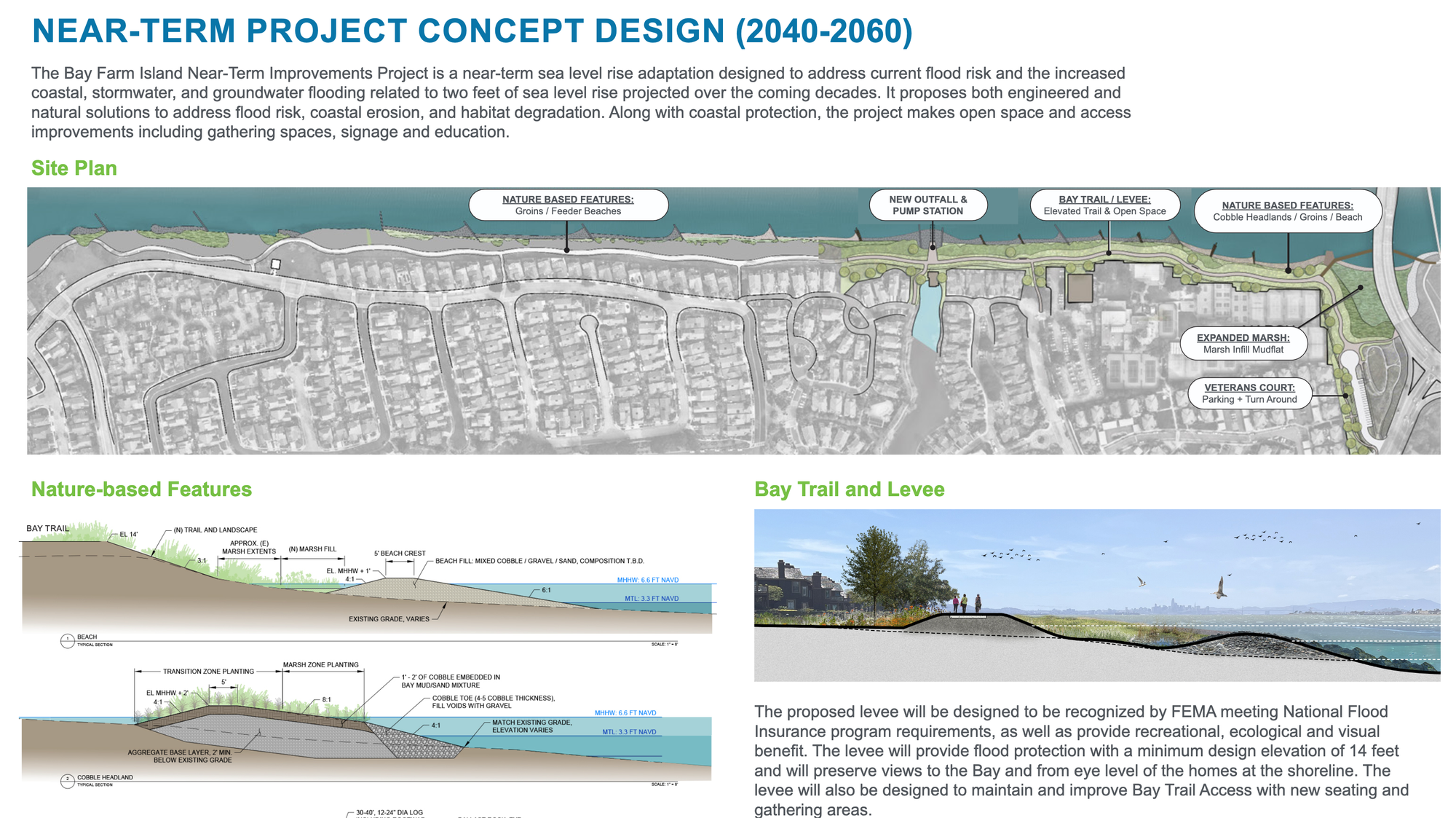
The project is being designed to reduce flood risk enough that, once built, lagoon-area residences will be removed from the FEMA Special Flood Hazard Area. Those property owners with mortgages will generally no longer be required by their lenders to buy flood insurance.
Just as I and my cohort of recent arrivals to Alameda aren't even aware of a time before the underground basin in Krusi Park, future arrivals to some neighborhoods — if these projects are funded and built — may not even have to learn about mandated flood insurance.
Measure L
Alameda’s municipal Measure L is on our November 3 ballots to fund flood-prevention projects including these (along with repaving streets, maintaining reliable emergency response, and a select set of other critical needs on the detailed project list written into the measure).
And more broadly it's an opportunity for our current generations to do what previous generations have done before ours: Pool our funds and solve pressing problems in Alameda together.
The reward may be similar to what I’ve heard is the "reward" for being a parent. As a kid, I often complained about how boring it was to grow up in the same house and neighborhood for ~18 years. Only now, as an adult, do I realize how much effort my parents must have put in to make that possible. If we pass Measure L, tax ourselves, and build these critical infrastructure improvements, our thanks from future generations in Alameda may be little more than a shrug. That’s fine. There will be much to be proud of if we can earn such indifference.
- Local money, local projects: Measure L funds stay 100% in Alameda. The region, state, and federal government can’t redirect this money elsewhere.
- A much bigger bang for our buck: Most large infrastructure grants require a “local match.” Measure L gives the city that match up front, so Alameda can compete vigorously for regional, state, and federal grants that often cover 70% or more of a project’s cost. (That's exactly how, in 2000, Alameda voters passed a general obligation bond and paired those local funds with an even larger grant from the state to build the main Alameda Free Library building.) It's through pursuing external matching funds that Alameda will leverage the $300 million of Measure L to tackle the estimated backlog of ~$800 million of infrastructure needs across the city.
- Capital projects only: Bond proceeds are restricted to the detailed capital project categories, with annual reporting and a citizens’ oversight committee, and they can’t be used to fund pensions. Municipal operations are critical to our daily lives in Alameda and this blog often writes about the value of public services — but it's important to be precise about this: Measure L funds may only legally be used for the design, construction, and delivery of capital projects.
Instead of ending with imaginary softball players cheering on Measure L (I try not to use my kids, real or imagined, for politicking :) let's end this blog post with the real words of others:
Greenbelt Alliance is knee-deep in the work of helping Alameda County communities take action and prepare for the growing threats of sea level rise.
[...]
Greenbelt Alliance is proud to endorse Measure L in the city of Alameda. The Safer Alameda Act (Measure L) would open up new funding to prepare for flooding, earthquakes, and aging infrastructure.
[...]
When it comes to protecting people and places, prevention is the best strategy. That’s why we must fund climate resilience now while we still have time to adapt.
Greenbelt Alliance is one of many Alameda-based and Bay Area-based organizations endorsing Measure L:
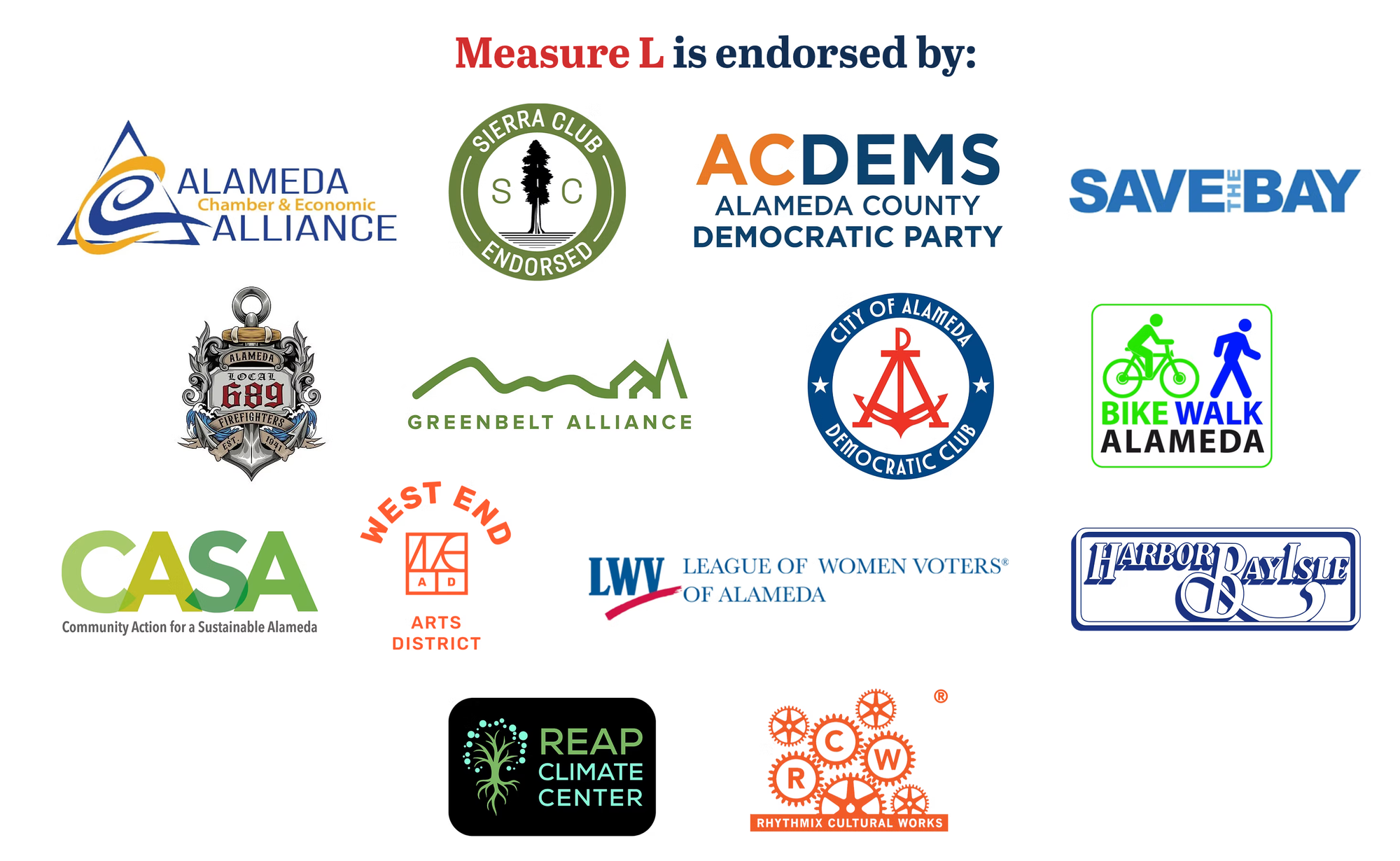
There's no time like the present to prepare for tomorrow!
→ Request a yard/window sign and it will be delivered right to your home, office, or storefront.
→ Use your own words to tell two neighbors/friends/Alameda acquaintances about Measure L.
Thanks!