As I stood alongside my cargo bike in the middle of Otis Drive this morning, my 2nd grader sat on the rear, counting his schoolmates and their parents crossing the "state highway" on their bikes. He clicked up to 66 on a handheld clicker, while I chatted with a guy with his window down nearby in his idling pickup. I was apologetic but the truck driver didn't mind waiting for our crossing "bike bus" — he was only driving across town, he said.
We were also all heading across town, to the new site of Otis Elementary School.
For this fresh school year and for next school year, Otis students and teachers and staff have taken over AUSD's temporary campus (on the former site of Lum Elementary near Grand Street and Otis Drive). The temporary campus's portables were all occupied last school year as well, by Wood Middle School students. But whereas it was just a shift around the block for Wood families, for Otis families it's over an extra mile as the crow flies:
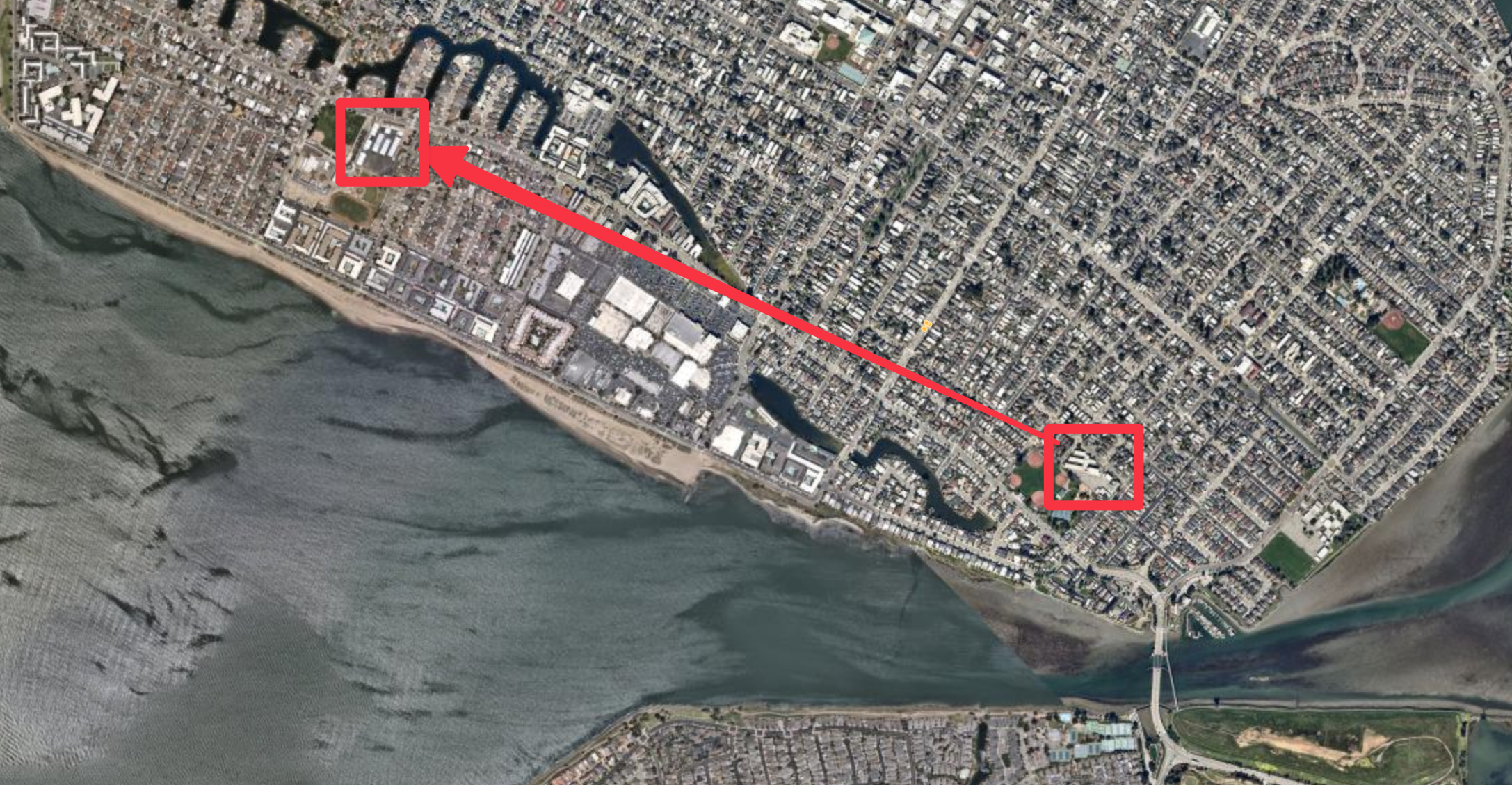
Leaving Otis D. Owl, their school mascot, aside, Otis Elementary students can't fly.
Along the actual street network of Alameda, the move makes for a very awkward distance to travel. Whereas many have walked from their homes to the campus next to Krusi Park, getting to the temporary campus will be a bit too far to march most kids every morning:
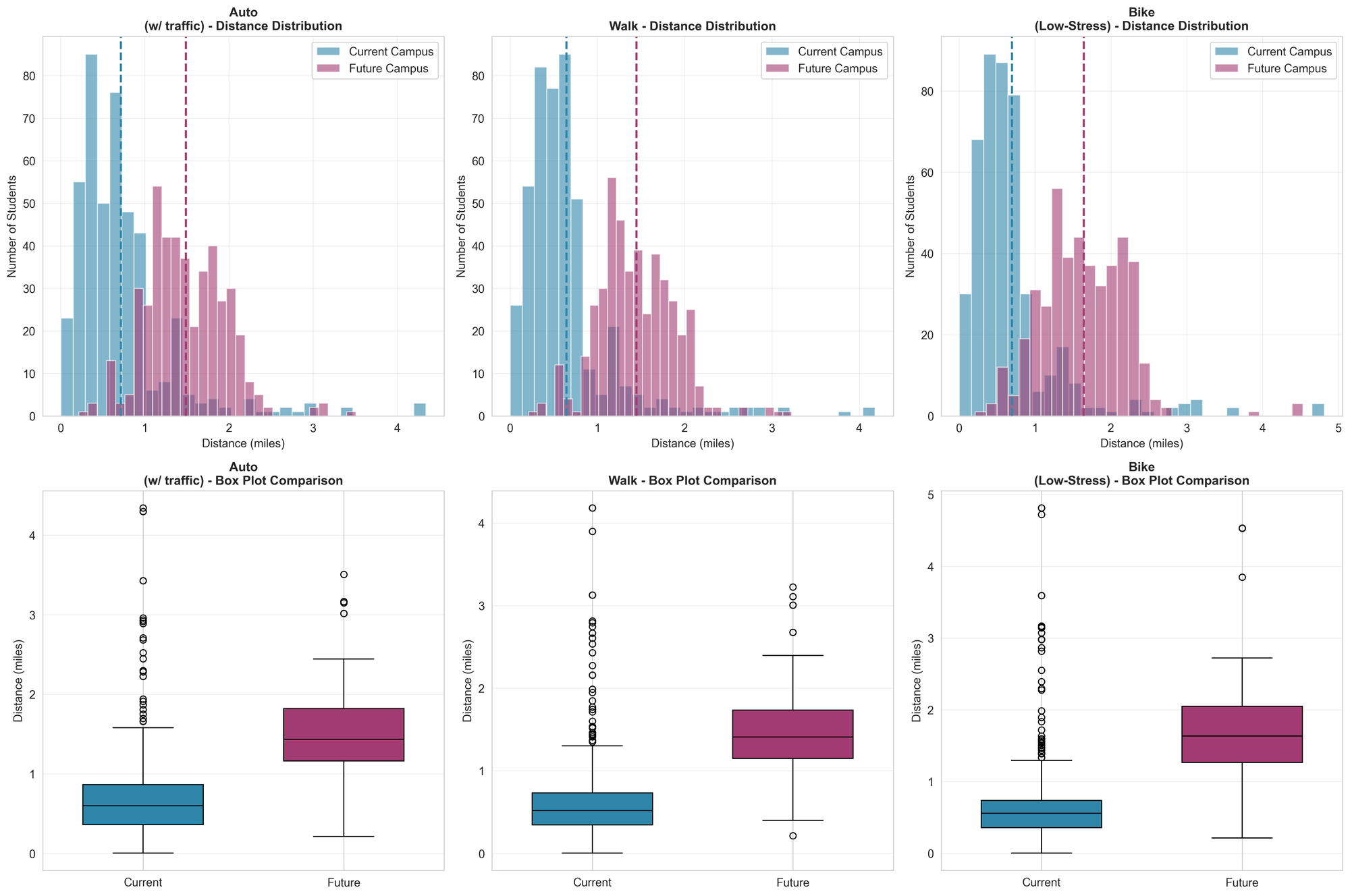
Well, O.K., I learned of one 5th grader who has insisted on doing the full walk by herself... still, it's an odd in-between distance for most families and elementary-school ages between just go hoof it and get in the car and buckle up, kiddos!
The journey from the Otis Elementary catchment area to the AUSD temporary campus is also complicated by "State Route 61" — that's the official name of Otis Drive as it runs past Krusi Park. It's a portion of the State Highway System, owned by the State of California, funded by the California Transportation Commission, and managed by Caltrans through their Bay Area District 4.
In the words of a senior manager at Caltrans D4 when presenting to the City of Alameda Transportation Commission, State Route 61 must have 4 through-lanes of auto traffic because people need to get to South Shore Center — and therefore, there I was, along with other yellow-vest clad volunteers, politely but firmly reminding those motorists in those 4 lanes to stay fully paused until all of the elementary-aged students crossed the state highway. (Before this turns into another deep dive on Caltrans, here's a link to all the Bun's previous posts on SR-61.)
As we rolled through the Bay View neighborhood and then entered Shore Line Drive's protected cycletrack, the "bus" grew and grew. As we exited the Shore Line cycletrack to head northeast on Grand Street, at least 114 riders were counted in the "bus." By the time we rounded Otis Drive to enter the top of the new Otis/temp campus, we lost count of the number of cycling kids and parents.
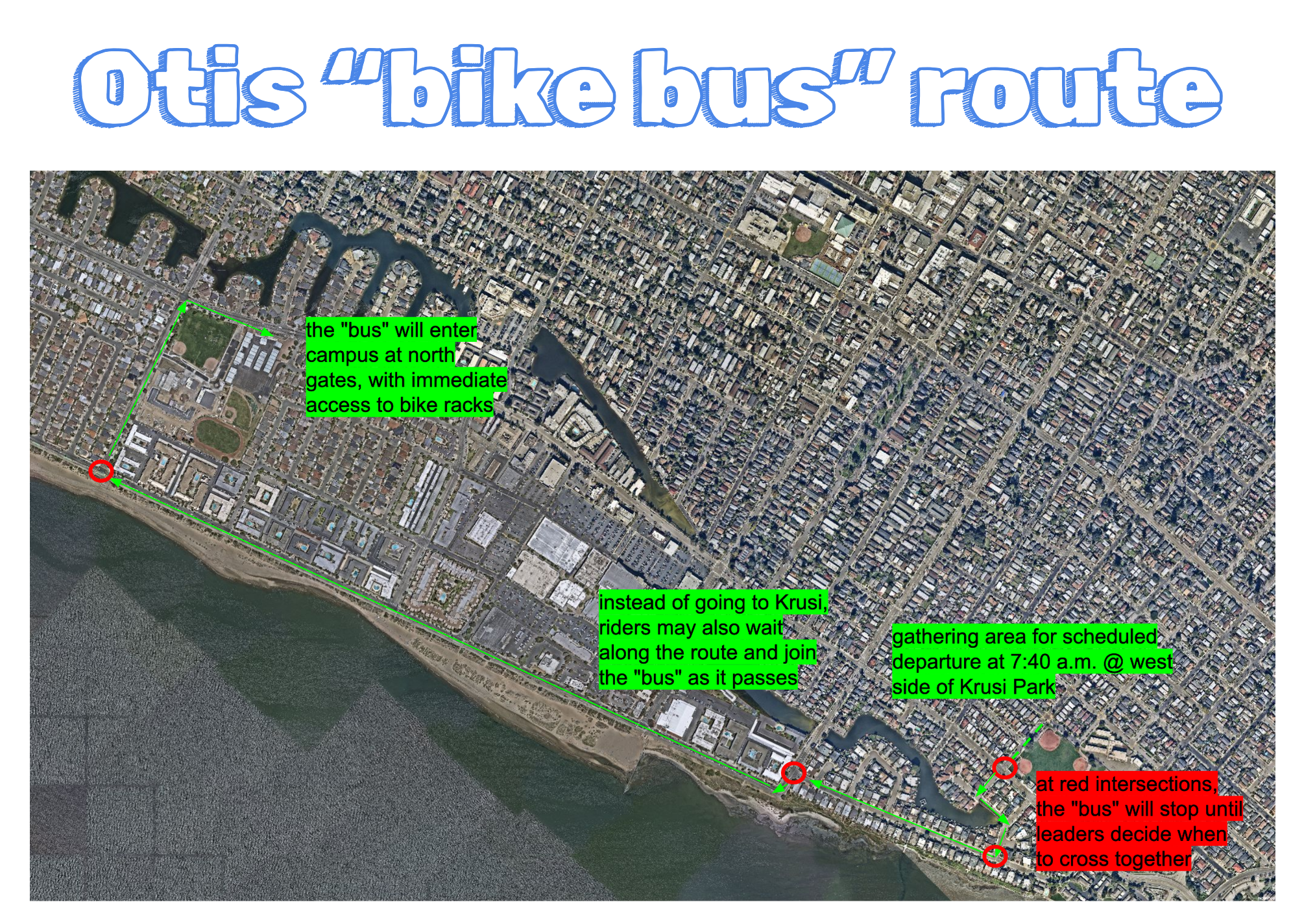
Making < 3 mile trips sustainable
Instead of 60 - 100 households driving their kids ~2 miles to the first day of school in a private auto, likely emitting exhaust along the way and certainly leaving brake dust and tire microplastics in their trail as they searched for parking, we all got a healthy dose of exercise.
This is Alameda's most critical pollution problem in a nutshell:
- Per Alameda's Climate Action and Resiliency Plan (CARP), the majority of our greenhouse gas emissions in Alameda are from on-road transportation (54% in 2022).
- Per the Alameda Active Transportation Plan (ATP), the majority of those trips are 3 miles or less (63% as of 2022).
Let's be real: We're in a climate crisis. The actions we take today will influence, in however minute a way, the future of the planet. While there are many problems to solve at all levels of geography and all levels of government, the most tractable of problems right here in Alameda is to make it safe, easy, and fun to get around town without a private auto.
To be clear, there will always be reasons and situations for people of all ages to need and use private autos. This isn't about "canceling driving"; it's about unlocking walking and biking for everyone who can, is curious, and wants to. Per the Active Transportation Plan's statistically valid sample survey performed by a polling firm:
More than half of residents (55%) believe they would drive less if biking and walking in Alameda were safer, and two-thirds (66%) say they have car trips they could replace with walking or biking.
But to make that replacement of short auto trips with biking and walking possible, it has to feel possible.
Safe streets don't happen by accident
The planning process for the Otis Elementary move hasn't been uncontentious. It's a major disruption to families' established routines. At one meeting, I recall an aggrieved parent loudly objecting that their student would likely have to reach the new campus by traversing an intersection where a senior had been killed by a motorist.
I held my tongue and didn't ask "which intersection?" — as, in fact, two different seniors have been killed in recent years by motor vehicles at two separate intersections near the temporary campus:
- City of Alameda did redesign the Otis/Grand intersection after 78-year-old Sam Sause was struck by a bus driver in that intersection in 2014 (since that portion of Otis Drive isn't owned by the State of California)
- And the City has made more subtle but still helpful safety improvements to the Grand/Shore Line intersection after 72-year-old Wilma Chan was struck by a car driver in that intersection in 2021.
In contrast, Caltrans has made no substantive changes to its portion of Otis Drive since a jogging Robert W. Crown was struck and killed by a driver in 1973, not far from where our "bike bus" crossed this morning. (He was the assemblymember who became the namesake of Alameda's state beach park.) It's due to that ongoing "double threat" hazard of not all auto traffic fully stopping that our neon-vested volunteers held traffic this morning.
(AUSD and the City of Alameda have also arranged a crossing guard to be stationed at Mound/Otis to provide more redundancy before and after school, but they weren't there this morning — that's already being addressed.)
In addition to being real about pollution, let's be real about traffic safety: Streets aren't safe for our kids or ourselves or our neighbors by accident.
Alameda has a growing network of safer streets that are suitable for elementary and middle school students only thanks to deliberate and ongoing work by City of Alameda staff, the current Mayor, multiple rounds of City Council members, multiple rounds of Planning Board and Transportation Commission members, involvement from Alameda Unified School District and its staff and board members, advocates organizing under the banners of Bike Walk Alameda and Bike East Bay, and many everyday residents who care about traffic safety, walking, biking, and sustainability.
In the words of Bike Walk Alameda:
The city first considered a proposal to install a bikeway on Shoreline and Westline drives [the cycletrack where our bike bus traveled this morning] in 1974 and decided to make it a priority in its 1999 Bicycle Master Plan. In 2011, Alameda received a Caltrans grant that enabled the city to move forward with the project. After two years of community outreach, design and review, the City Council approved the project and broke ground in 2014. The new, two-way cycle track was opened in 2015, and Alameda Magazine’s readers dubbed it the “Best Thing to Happen in the Past Year.”
Our bike bus also traversed:
- the first phase of Alameda's Grand Street cycletrack completed in 2025 (funded by countywide Measure B/BB funds, gas taxes, and a regional grant from MTC)
- the parking-protected bike lane on the city-owned portion of Otis Drive completed in 2021 (funded by countywide Measure B/BB funds, the city's General Fund, local Developer Impact Fees, and the Bay Area Air District)
These improvements didn't happen without argument and advocacy and sometimes difficult tradeoffs. And it's only thanks to strategic deployment of local funds and tireless work to seek much larger regional and state and federal matching funds that these improvements have been realized by Alameda.
There's still much work to do. A city's "low stress" bike network is only as good as its weakest/scariest/most dangerously stressful link:
- Grand Street from Otis Drive up to Clement Ave continues to have "paint-protected" bike lanes where the paint has almost fully faded. Under City Manager Jennifer Ott, Alameda dedicated funds to continue the cycletrack north to Encinal Ave. But no funds have been allocated since then and no date has been set to fully connect the cycletrack north to the Cross Alameda Trail at Clement Ave. Traveling north/south will continue to be a challenge, especially for Wood Middle School students, who will continue to bike in the "door zone" of parked cars for additional school years.
- We need to hold Caltrans District 4 to their promise to file paperwork within the coming year with the California Transportation Commission to plan a road diet on Otis Drive to moderate auto speeds between signalized intersections alongside Krusi Park. The current highway configuration only promotes unnecessary speeding by motorists (who will rapidly stop at the next signal anyway) and the pedestrian crossing hazards previously described in a Morning Bun's post titled "Driver hits and flips a baby in their stroller."
- Alameda's Neighborhood Greenways are needed to complete a "low stress" biking and walking network that reaches from as many front doors as possible to every elementary and middle school, with key protected crossings of busier city-owned arterials.
Per current estimates, my 2nd grader with his clicker counting kids riding past on bikes this morning will be entering high school as some of those projects are finally completed.
It's been a decades-long effort to transform Alameda into a safe place for kids to get to school not only by parent-piloted SUV but also by foot and bike — and "bike bus." Thank you to everyone who has made this possible so far. There's more work to do toward a sustainable Alameda with zero serious traffic injuries or fatalities, so please hop on the bus (metaphorically) and if you see the Otis bike bus rolling past (in reality), please stop and give a wave!